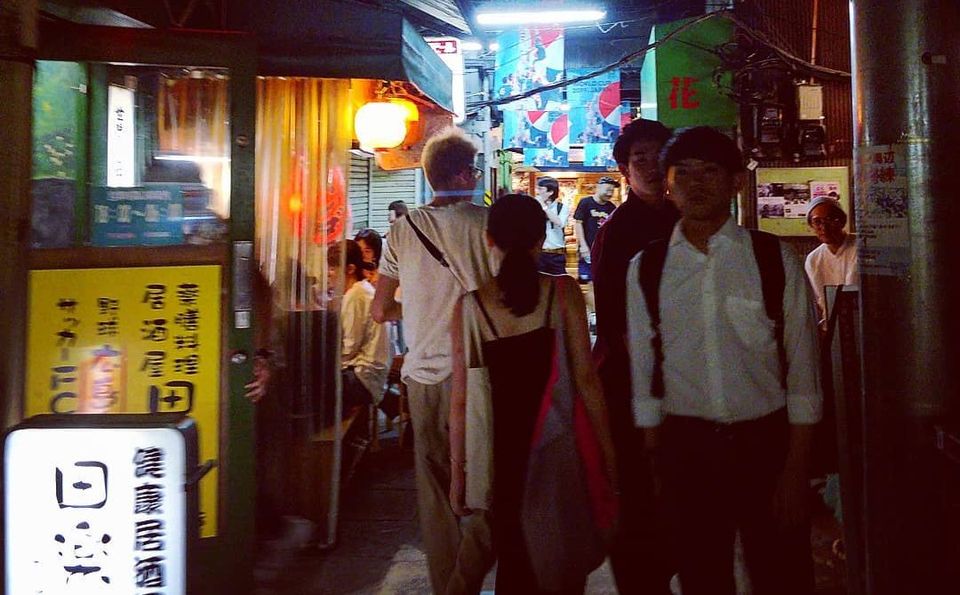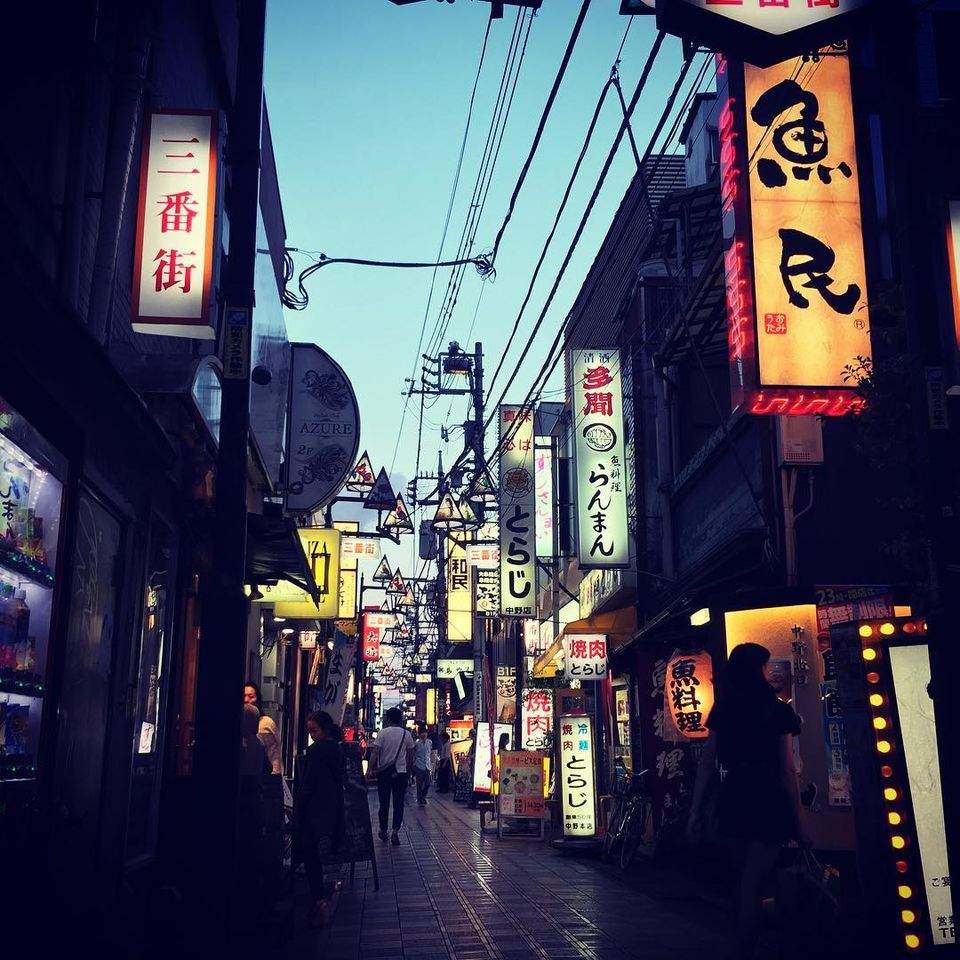
If you are working out what to do in Tokyo for first timers, this is the plan we give our own friends: three days, one neighborhood loop per day, and every evening handed over to the thing Tokyo does better than anywhere, its nightlife. Our guide Alejandro has lived here since 2016 and walked more than 1,000 guests through the city, and the pattern never changes: first-timers nail the shrines and the famous crossing, then head back to the hotel at 8pm and miss the half of Tokyo that lives in tiny bars and smoky alleys.
How many days in Tokyo do you need? Three is enough for a first trip if you group sights by neighborhood instead of zig-zagging across the city, and Day 3 takes you somewhere most listicles never mention: Kichijoji, 15 minutes west of Shinjuku.
Before You Land: Suica, Cash and Where to Stay
Get an IC card first. A Suica or PASMO covers almost every train, subway and bus in the city, plus convenience stores, vending machines and coin lockers. On an iPhone you can add Suica to Apple Wallet in a minute. Most Android phones bought outside Japan can't, so pick up a physical card or the visitor version, Welcome Suica, at the airport when you arrive.
Airport to city. From Narita, the Narita Express reaches Tokyo Station in about an hour and continues to Shinjuku and Shibuya; the Keisei Skyliner gets you to Nippori and Ueno in about 40 minutes. Haneda is much closer: the Keikyu Line reaches Shinagawa in about 15 minutes, with some trains running straight through to Asakusa, and the Tokyo Monorail takes about 20 minutes to Hamamatsucho. Airport Limousine buses stop at many big hotels if you would rather not change trains with luggage.
Cash vs card. Cards work in most shops, chains and hotels now, but small izakaya, market stalls, many shrine charm counters and some ramen ticket machines are still cash only. Keep around ¥10,000 in your wallet and top up at 7-Eleven (Seven Bank) or Japan Post ATMs, which accept most foreign cards.
Where to stay. Shinjuku and Shibuya put you on the busiest train lines with nightlife on your doorstep. Ueno and Asakusa are calmer and often better value. Either way, being within a few minutes of a station matters more than the neighborhood name.
Day 1: Asakusa, Senso-ji and an Old-Tokyo Evening
Start with breakfast at Tsukiji Outer Market. The wholesale fish market moved to Toyosu in 2018, but the outer market's lanes still sell tamagoyaki on a stick, grilled scallops and bowls of fresh tuna over rice. Aim for 8 to 11am: most stalls wind down by early afternoon, and many close on Sundays, public holidays and some Wednesdays, so check the market calendar before you set your alarm.
From Higashi-ginza Station, a short walk from the market, the Toei Asakusa Line runs straight to Asakusa in about ten minutes. Walk under the red Kaminarimon gate, along the snack stalls of Nakamise-dori and into Senso-ji, Tokyo's oldest temple. Waft incense smoke over yourself, draw an omikuji fortune (tie a bad one to the rack and leave it behind), and eat snacks beside the stall you bought them from, not while walking. For the afternoon, pick one: Kappabashi kitchenware street, a walk along the Sumida River, or the view from Tokyo Skytree across the water.
Here is the local move: go back to Senso-ji after sunset. The main hall closes around 6pm, but the grounds stay open, the gate and the five-storey pagoda are lit until about 11pm, and the tour groups are gone. Then walk three minutes west to Hoppy Street, a row of no-frills izakaya with stools spilling onto the pavement. Order beef-tendon stew (nikomi), a few yakitori skewers and a Hoppy, the beer-flavored mixer you pour into a glass of shochu. Expect roughly ¥500–700 a drink.
Day 2: Meiji Shrine, Harajuku and Shinjuku After Dark
Meiji Jingu opens at sunrise and closes at sunset, and the gravel path under the giant cypress torii is at its quietest before 9am. Bow once under the gate, rinse your hands at the water basin and give yourself an hour; the main shrine is a 10-minute walk in from Harajuku Station. Right outside, Harajuku hits you with the opposite energy. Twenty minutes on Takeshita-dori is plenty; then follow the calmer Cat Street down to Shibuya, about 20 minutes on foot.
Shibuya Crossing is best seen twice: once walking through it, once from above. The elevated walkways around Shibuya Station give you a free view, and Shibuya Sky is the paid rooftop version, where sunset slots sell out first, so book ahead. In the afternoon, trade crowds for color at teamLab. teamLab Borderless at Azabudai Hills is 20 to 30 minutes from Shibuya by train, and teamLab Planets in Toyosu is a good rainy-day swap. Both use timed tickets, so reserve before your trip.
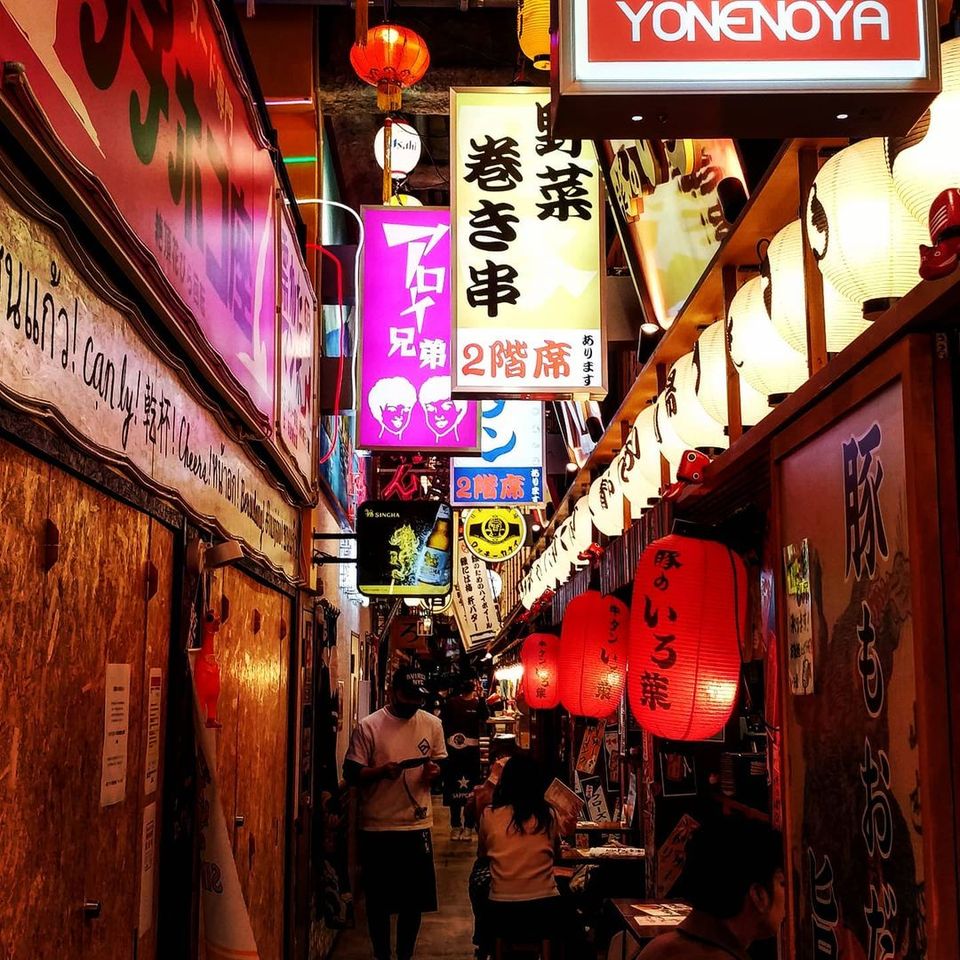
The evening belongs to Shinjuku. Start at Omoide Yokocho by the west exit, a narrow lane of yakitori counters where you sit shoulder to shoulder with office workers. Then cross to Golden Gai, a few tight lanes packed with tiny bars, many fitting fewer than ten people. Lots of them charge a seat fee and a few are regulars-only, so look for doors with an English menu or a welcome sign, and ask about the charge before you sit. One firm rule: never follow touts in Kabukicho, however friendly they seem. For a full rundown of districts, see our guide to what to do in Tokyo at night.
Day 3: Kichijoji, Inokashira Park and Your Big Night Out
Begin with a slow morning at Shinjuku Gyoen, which fits a Japanese garden, a French formal garden and an English lawn into one park. It opens at 9am, entry is ¥500, it is usually closed on Mondays, and alcohol is not allowed inside, so save the drinks for later. Then ride the JR Chuo Line rapid west from Shinjuku, about 15 minutes, to Kichijoji in Musashino City, the neighborhood that regularly tops Japanese "most desirable place to live" rankings.
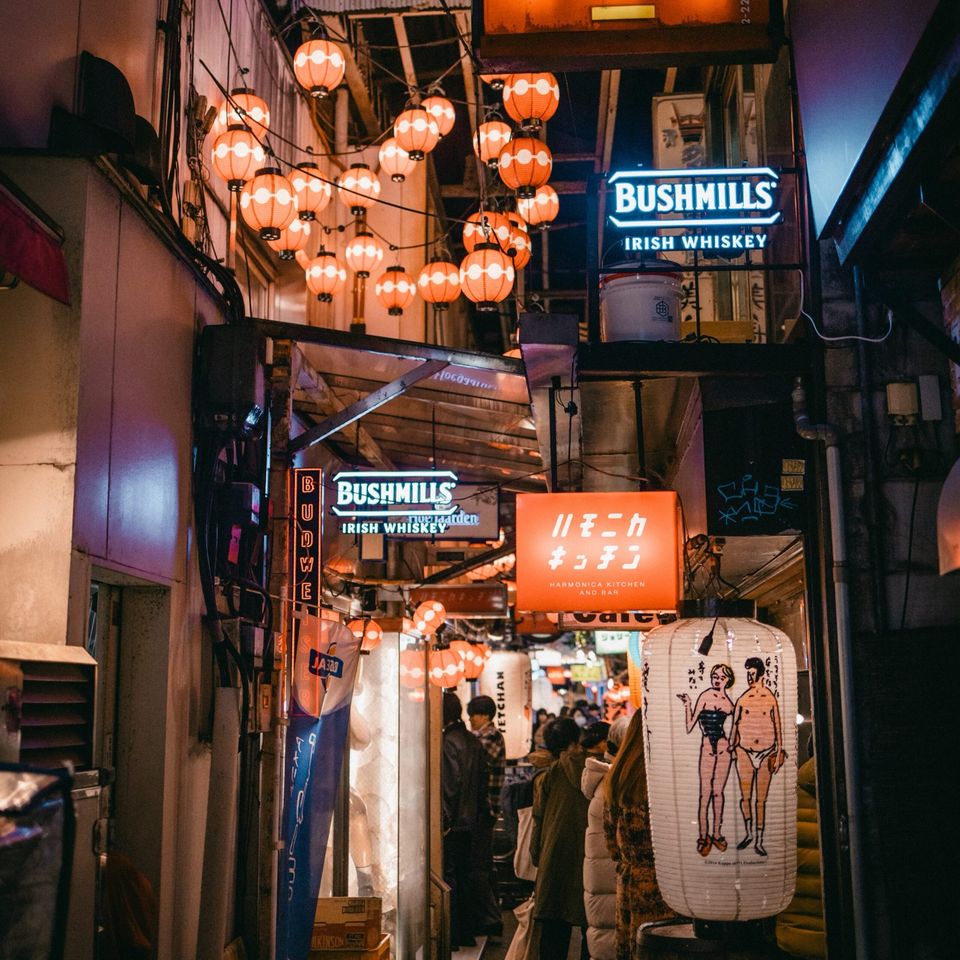
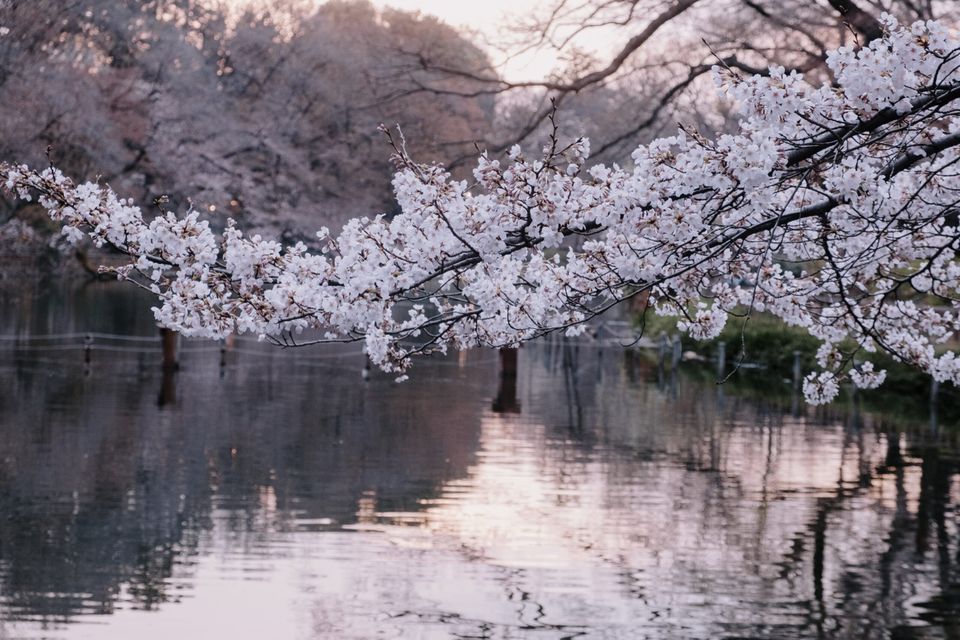
Leave the station by the Park Exit and it is a five-minute walk down to Inokashira Park. Rent a rowboat or swan boat on the pond and, if you planned ahead, visit the Ghibli Museum at the Mitaka end of the park; tickets are sold in advance only, never at the door. Then head back to the north side of the station and wander Harmonica Yokocho while the shutters are still half down. Our Harmonica Yokocho guide covers the alley in detail.
When it gets dark, Harmonica Yokocho turns into a maze of roughly 100 post-war bars and eateries, some with five or six seats, where menus are handwritten in Japanese and every door looks closed. That is why we built our Kichijoji Hidden Bar Hopping night around it: four hours of hidden bars in Kichijoji and Harmonica Yokocho, a variety of Japanese cocktails, $120 per person, Tuesday to Sunday from 19:00, maximum 8 guests. We meet at Kichijoji Station's Park Exit, open the doors, interpret the conversations and show you how to drink like a regular. Book early if your Day 3 lands on a Friday or Saturday, because 8 spots go fast.
Where to Eat on Your First Trip
Conveyor-belt sushi is cheap, fun and fine at any hour. Ramen shops often have a ticket machine by the door: pay first, hand over the ticket, sit down. Basement food halls (depachika) are perfect for picnic supplies, and a convenience-store egg sandwich is a genuinely good breakfast.
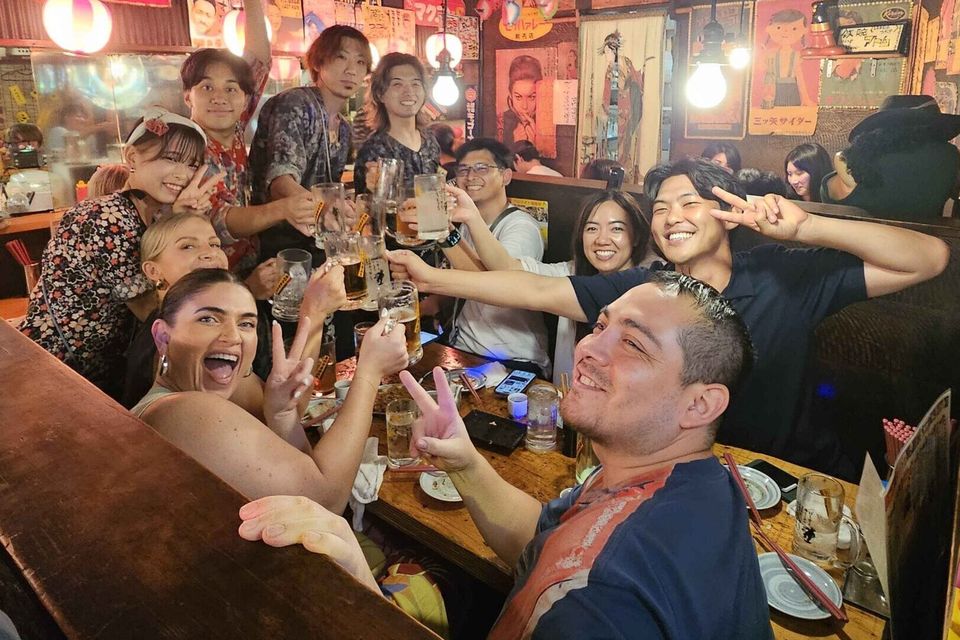
At an izakaya, a small appetizer called otoshi usually arrives without you ordering it. It is a seat charge of a few hundred yen, not a mistake. Order a few plates at a time, share everything and say "kanpai" before the first sip. If you want a second night out in a different part of the city, our Tacos & Beers Bar Hopping in Tokyo tour starts and ends at Tacos 3 Hermanos in Shimokitazawa: a shared plate of tacos and a drink at the first bar, then a local izakaya and a hidden bar. It runs 3 hours, $100 per person, Tuesday to Sunday at 18:00, maximum 10 guests. For more ideas, read where to eat in Tokyo at night.
First-Timer Etiquette: Trains, Tipping, Cash and Smoking
- Don't tip. Not in restaurants, taxis or bars. Leave money on the table and someone may chase you down the street to return it.
- Keep trains quiet. No phone calls, low voices, and your backpack on your front at rush hour. On Tokyo escalators, stand on the left.
- Know your last train. Most lines stop running between midnight and 12:30am, and the first trains leave around 5am. Check your route home before the second round, or budget for a taxi.
- Carry your trash. Public bins are rare, so take rubbish back to your hotel or use the bin at a convenience store.
- Smoke only in designated areas. Smoking on the street is banned across much of central Tokyo, even though some small bars still allow it inside.
- The drinking age is 20. Bars can ask for ID, and visitors are required to carry their passport anyway. All of our tours are 20+.
- Take your shoes off wherever you see a raised floor, tatami mats or a neat row of slippers.
What to Do in Tokyo for First Timers (and What to Skip)
We would skip queuing an hour for whatever dessert is viral this month, spending more than twenty minutes on Takeshita-dori, and squeezing a Mt Fuji day trip plus a theme park into a three-day visit. Tokyo rewards depth, not a checklist.
What we never skip: one evening in a yokocho alley, Senso-ji after dark, a slow morning in a park, and at least one night where a local walks you through a door you would never have opened alone.
Ready for Day 3? Save that evening for Kichijoji Hidden Bar Hopping and let us handle the doors, the menus and the last-train math. See you at the Park Exit at 19:00.