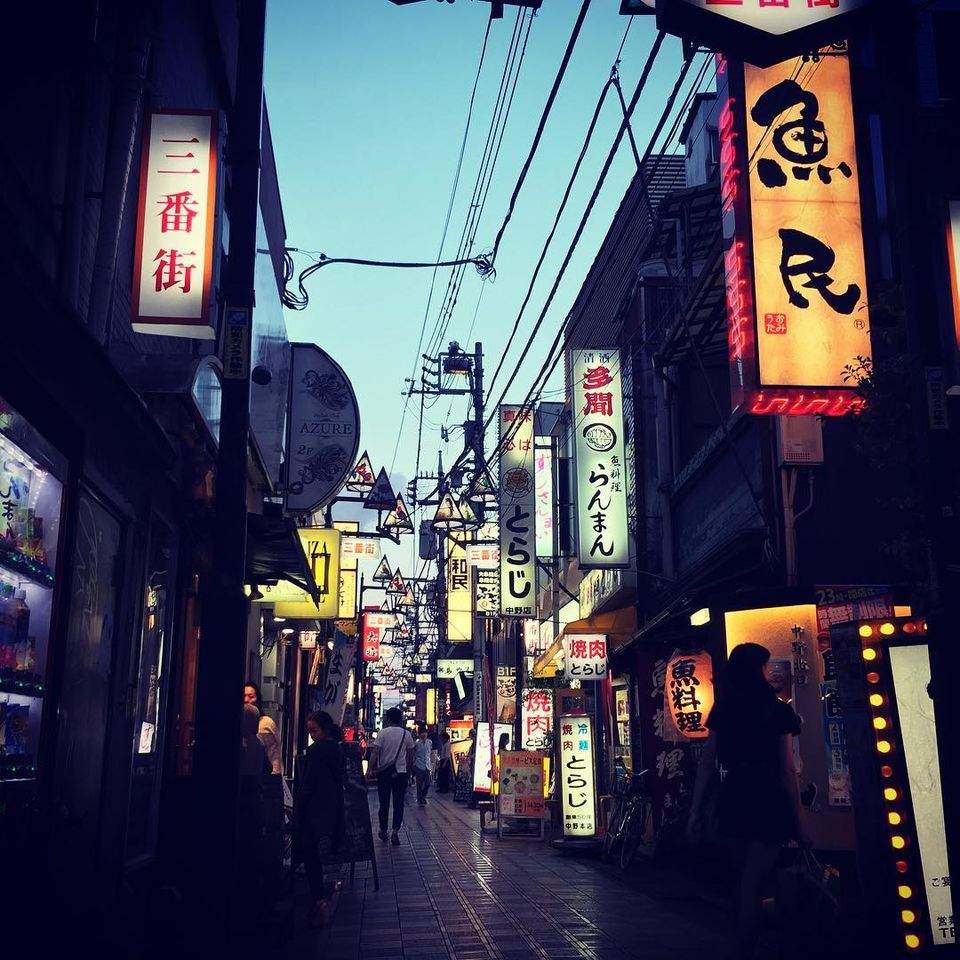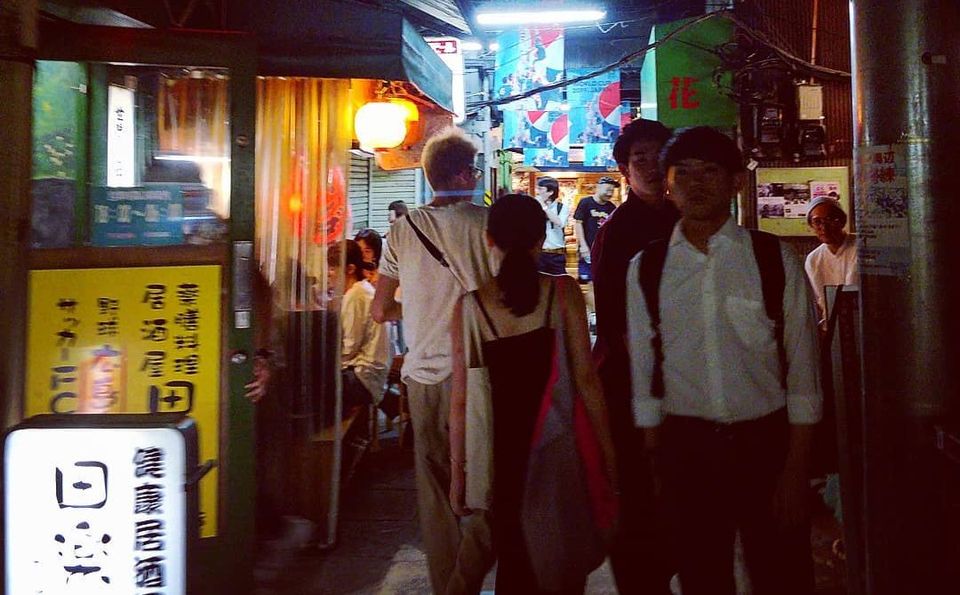
Ask Tokyoites where they would live if money were no object, and a surprising number say Kichijoji. This relaxed west-side neighborhood shows up near the top of Japan's "most want to live in" rankings again and again, and one day here explains why. We have been in Japan since 2016 and Kichijoji is where we run our nights, so this is our honest list of things to do in Kichijoji, from swan boats on Inokashira Pond to squeezing into a six-seat bar in Harmonica Yokocho after dark.
Why Locals Love Kichijoji
Kichijoji sits in Musashino City, just outside the 23 wards, but it never feels like the suburbs. Within ten minutes of the station you get a wooded park, two covered shopping arcades, record shops, used bookstores, indie cafés and one of the best-preserved post-war drinking alleys in Tokyo. The appeal is the balance: lively without the Shibuya crush, green without being sleepy, and the person drinking next to you at night is far more likely to be a local than another tourist.
Getting There From Shinjuku
Kichijoji Station is about 15 minutes from Shinjuku on the JR Chuo Line (Rapid). From Shibuya, the Keio Inokashira Line runs straight to Kichijoji, its last stop, about 17–20 minutes on the express. Suica and Pasmo work on both.
Two exits matter. The Park Exit (Koen-guchi) on the south side leads to Inokashira Park. The North Exit opens onto the Sun Road arcade and Harmonica Yokocho, which starts right across the road. Our evening tours meet at the Park Exit, so it is worth getting your bearings in daylight.
Daytime Things to Do in Kichijoji: Inokashira Park and the Pond
From the Park Exit, follow the lane downhill past the yakitori smoke drifting out of Iseya and you reach Inokashira Park in about five minutes. The heart of the park is a long, tree-lined pond, and the classic move is to rent a rowboat or a swan-shaped pedal boat. Locals love the legend that couples who ride together here will break up, blamed on the jealous goddess Benzaiten, whose shrine sits at the end of the pond. Most couples ride anyway.
The park also has a small zoo, Inokashira Park Zoo, with an aquatic section beside the pond, and on weekends the paths fill with buskers and craft stalls. Ghibli fans can walk through the trees to the Ghibli Museum in neighboring Mitaka. Tickets are sold in advance only, for a fixed date and time, so book before you arrive.
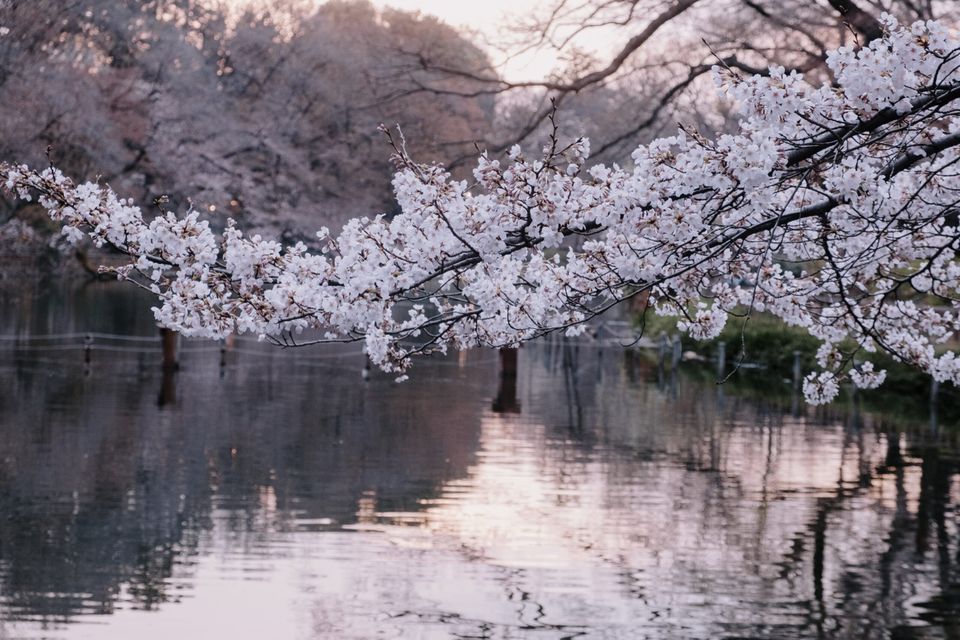
In spring the pond is one of Tokyo's best-loved hanami spots. Bloom is usually late March to early April but shifts every year, so check a cherry blossom forecast (Weathernews and the Japan Meteorological Corporation publish them from late winter) before you lock in dates. Our guide to what to do in Tokyo in spring covers the season in detail.
Sun Road, Vintage Shops and Cafés
On the north side, Sun Road is a long covered arcade of drugstores, bakeries and everyday Japanese life. Branching off it, Daiya-gai (Diamond Street) runs along the edge of Harmonica Yokocho.
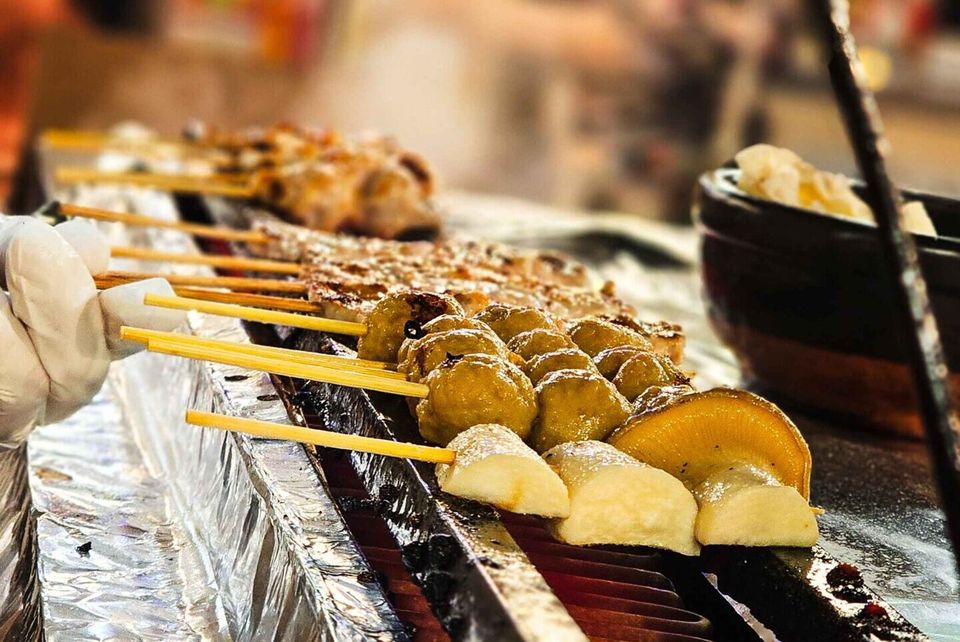
The browsing gets good once you leave the arcades. The side streets toward Nakamichi-dori are full of vintage clothing, zakka homeware stores, used records and coffee bars with five seats and a serious espresso machine. Pick a lane and keep walking. Hungry before evening? Join the queue for a menchi-katsu, a deep-fried minced-meat cutlet, from the butcher on the edge of Harmonica Yokocho.
Harmonica Yokocho After Dark: How the Alley Works
Harmonica Yokocho began after World War II as a black market of makeshift stalls north of the station, selling whatever people could find in a city rebuilding from nothing. The stalls became permanent, the lanes stayed impossibly narrow, and the name stuck because the rows of tiny shopfronts look like the holes of a harmonica.
Today around a hundred small businesses share a handful of short lanes. By day there are fishmongers and sweet shops; by night the shutters roll up on bars and eateries, many with room for only six or eight people. Some have been pouring for decades and look it: dark wood, handwritten menus. Others are newer, with natural wine or standing-room highballs.
The catch is that you cannot see most of it from the main street. Entrances are small, signs are often in Japanese only, and some of our favorite spots are not even on Google Maps.
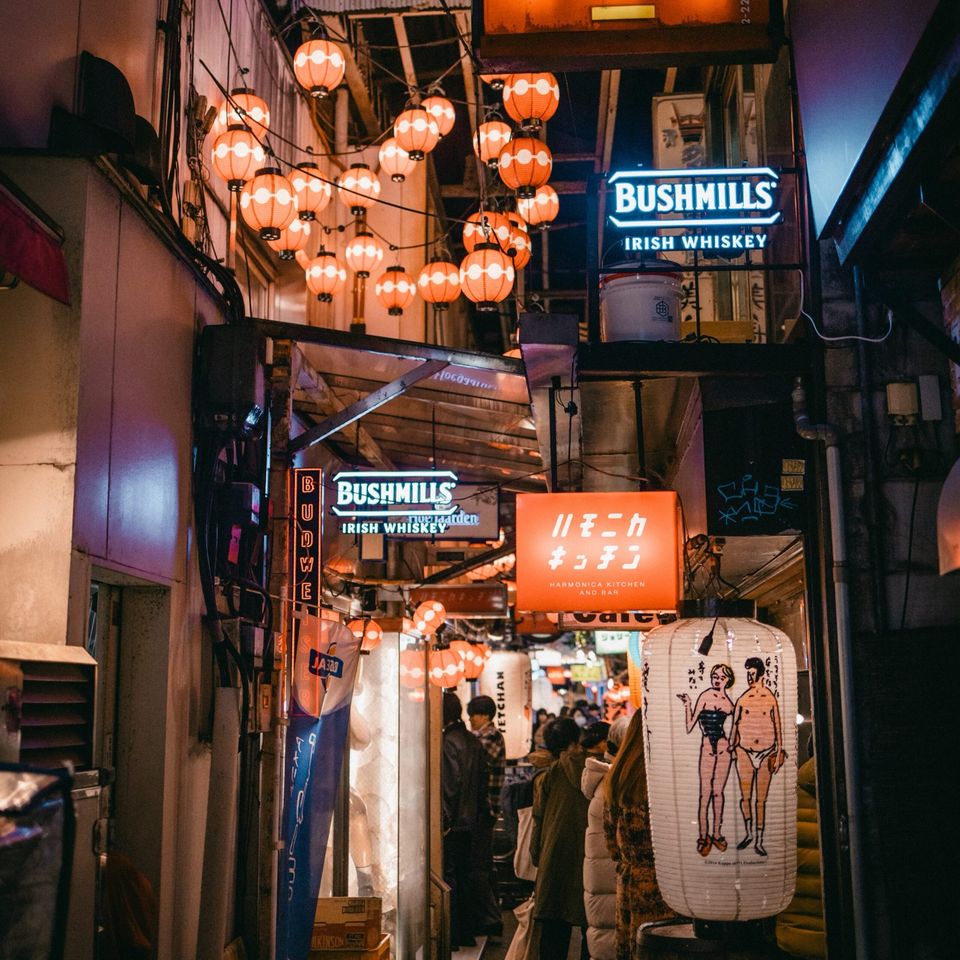
Want the shortcut? On our Kichijoji Hidden Bar Hopping night we spend four hours hopping through hidden bars in Kichijoji and Harmonica Yokocho, with a variety of Japanese cocktails, etiquette tips and full interpretation by a trilingual guide. It runs Tuesday to Sunday evenings.
Tiny-Bar Etiquette: Seating, Cover Charges and Ordering
How to Behave in a Six-Seat Bar
Look in before you walk in. If every stool is taken, smile and try the next door. If there is space, hold up your fingers and ask "Futari, daijoubu desu ka?" (OK for two?). Pairs and threes slip in easily; five or more should split up. Keep bags on your lap, never block the doorway, and match your volume to the room. Chatting with your neighbor is half the fun, but ask before photographing other customers or the owner.
Otoshi and Cover Charges
Most izakaya-style bars add an otoshi: a small dish such as pickles that arrives unordered and shows up on the bill as a charge of a few hundred yen per person. It is not a scam and it is not optional; it is the seat charge, and the dish is what you get for it. A few cocktail bars charge a separate cover instead. If it matters, ask before sitting down: "Chaaji wa arimasu ka?" The polite rhythm is at least one drink per person per bar. Nursing one beer for an hour while people wait outside is the real faux pas.
Bring Cash
Card payments are spreading, but plenty of tiny counters still prefer or only accept cash. Carry yen in small notes; drinks in most bars here run around 500–700 yen.
What to Order
Start with a draft beer or a highball (whisky and soda), the default first round across Japan. A lemon sour, shochu with lemon and soda, is dangerously easy to drink. If there is a sake list, say whether you like dry or sweet and let the owner choose. For food, yakitori, gyoza and whatever is handwritten on the wall are safe bets. Ask "Osusume wa?" (What do you recommend?) and you will usually get the best thing in the house.
A Perfect Kichijoji Evening, Hour by Hour
The best time for Harmonica Yokocho is a weeknight from around 6 p.m., when the lanes are buzzing but stools are still free. On Friday and Saturday after 9 p.m. the popular counters fill up. Here is how we would spend it:
- 3:00 p.m. Coffee near the Park Exit, then a swan boat or a slow lap of the pond.
- 5:00 p.m. Wander back through the vintage shops and grab a menchi-katsu to line your stomach.
- 6:30 p.m. First round: a highball and yakitori at a standing counter in the alley.
- 7:30 p.m. Second bar: somewhere with six seats and a sake list. Let the owner pick.
- 9:00 p.m. Third round in the side streets north of the station, where small cocktail and music bars hide.
- 11:30 p.m. Head for the station. Last trains toward Shinjuku leave around midnight.
Comparing Kichijoji with Shinjuku and Shibuya? Our pillar guide to what to do in Tokyo at night lays out every option.
Bar Hopping Kichijoji With a Local
You can explore on your own with the tips above. What a local adds is access and context: which owners love first-timers, which door hides a bar that seats six, and how to order the thing that is not on the menu.
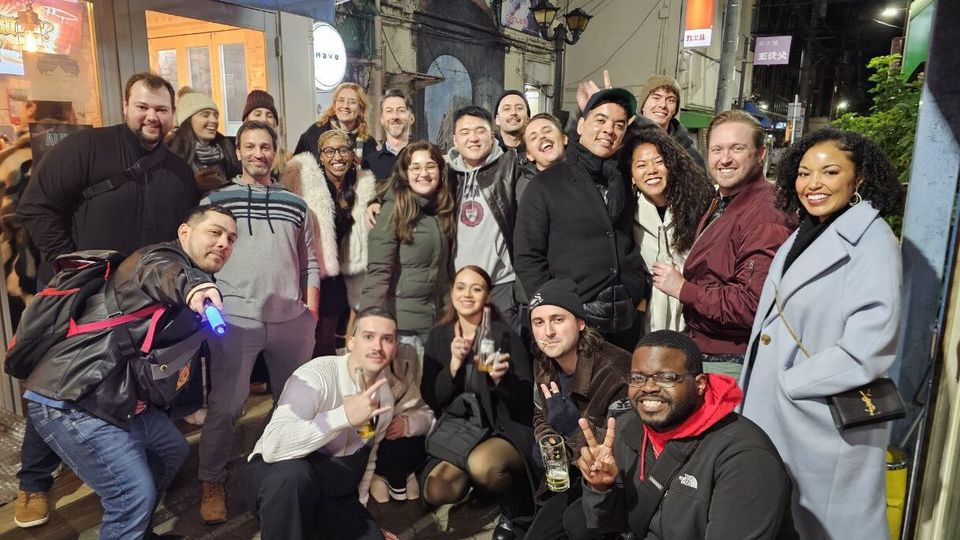
On our Kichijoji night we meet at 7 p.m. at the Park Exit and hop through hidden bars in Kichijoji and Harmonica Yokocho until 11 p.m., many of them invisible on Google Maps. Alejandro, our trilingual guide, interprets in English, Spanish and Japanese the whole way, so you can talk to owners and regulars, and he shows you the etiquette and a variety of Japanese cocktails worth trying. It runs four hours, Tuesday to Sunday, costs $120 per person (paid in full at booking) with a maximum of 8 guests, and you are back at the station for the last train. Guests pay for their own drinks, roughly 500–700 yen each. Guests must be 20 or older, Japan's legal drinking age.
Visiting in spring? From March 20 to April 10 we also run Sakura Sips: Cherry Blossom Bar Crawl, a five-hour night that starts at 5 p.m. with hanami drinks under the blossoms before heading into the alley.
Ready to see Kichijoji after dark? Book Kichijoji Hidden Bar Hopping for any Tuesday-to-Sunday evening.